
- Residential rentals with monthly rent above L 15,000 pay a single 10% annual tax (Decree 17-2010, article 5), declared in its own SAR module.
- Below that amount, the rent is ordinary income and goes on your annual personal income tax return.
- The threshold is measured per property, adding up all units or rooms in it; keep every receipt, because the tax is computed on what you collected in the year.
Renting out a home is income, and income is taxed. So far everyone agrees. What almost nobody is clear about is which tax: in Honduras there are two paths for an individual's residential rent, and which one applies to you comes down to one number: L 15,000 a month.
This guide explains both paths with what the Servicio de Administración de Rentas (SAR), the tax authority, publishes, in plain words, and ends with the exact questions worth asking an accountant.
This is not tax advice. The figures come from the SAR and the law, but your situation (several properties, commercial premises, a company) can change the answer. Confirm it with an accountant before filing.
The single 10% tax: when it applies
Since 2010 there has been a specific tax on residential rent. The SAR describes it as a "single and definitive" tax of ten percent (10%) per year on income from renting out homes and apartment buildings, when the rent exceeds L 15,000.00 per month. The legal basis is article 5 of Decree 17-2010, the Law for Strengthening Revenue, Social Equity and Rationalisation of Public Spending.
Three details in the SAR's text that change who it applies to:
- The threshold is per property, not per unit. The L 15,000 counts "whether as a single payment or as the total paid across all housing units or rooms of the same property". If you own a house split into three L 6,000 apartments, the property collects L 18,000 a month and falls under the tax.
- It is "single and definitive". That 10% replaces the ordinary income tax on that rental income; you don't pay both on the same rent.
- Excluded are hotels, motels and lodgings (taxed under the ordinary income tax) and boarding houses ("mesones o cuarterías") as defined by the Tenancy Law.
An example with round numbers: an apartment rented at L 20,000 a month produces L 240,000 a year. The single tax is 10%: L 24,000 a year.
How it is declared
The SAR has its own module for this: the Annual Sworn Declaration of the Cedular Income Tax on Residential Rent (SAR help page). According to that guide, the declaration asks for the type of rental (house or apartment building), the months of the year it was rented, and the annual income; the system computes 10% on the total. It is filed once a year through the SAR's online office.
What you need at hand to fill it in: how much you collected each month, for each property. Which is exactly what a good receipt record gives you.
If the rent is under L 15,000: the ordinary income tax
Below the threshold, the single tax does not apply. The rent is one more income of your year and goes on your annual personal income tax return (the SAR's form code 102), alongside your salary or other income, subject to the progressive income tax scale and its exempt band. The SAR publishes the guide for that form and a step-by-step help on its site.
To have the scale at hand: under SAR communiqué 02-2026, for the 2026 tax year annual net taxable income is exempt up to L 228,324.32; from there to L 348,154.10 it pays 15%; up to L 809,660.75, 20%; and from L 809,660.76 upwards, 25% (EY, Deloitte). The table is updated every January. The annual return is filed by April 30 of the following year.
If you are an employee and this is your only extra income, the conversation with the accountant is usually short: how much you collected in the year and which band it lands you in once added to your salary.
Receipts matter more than they seem
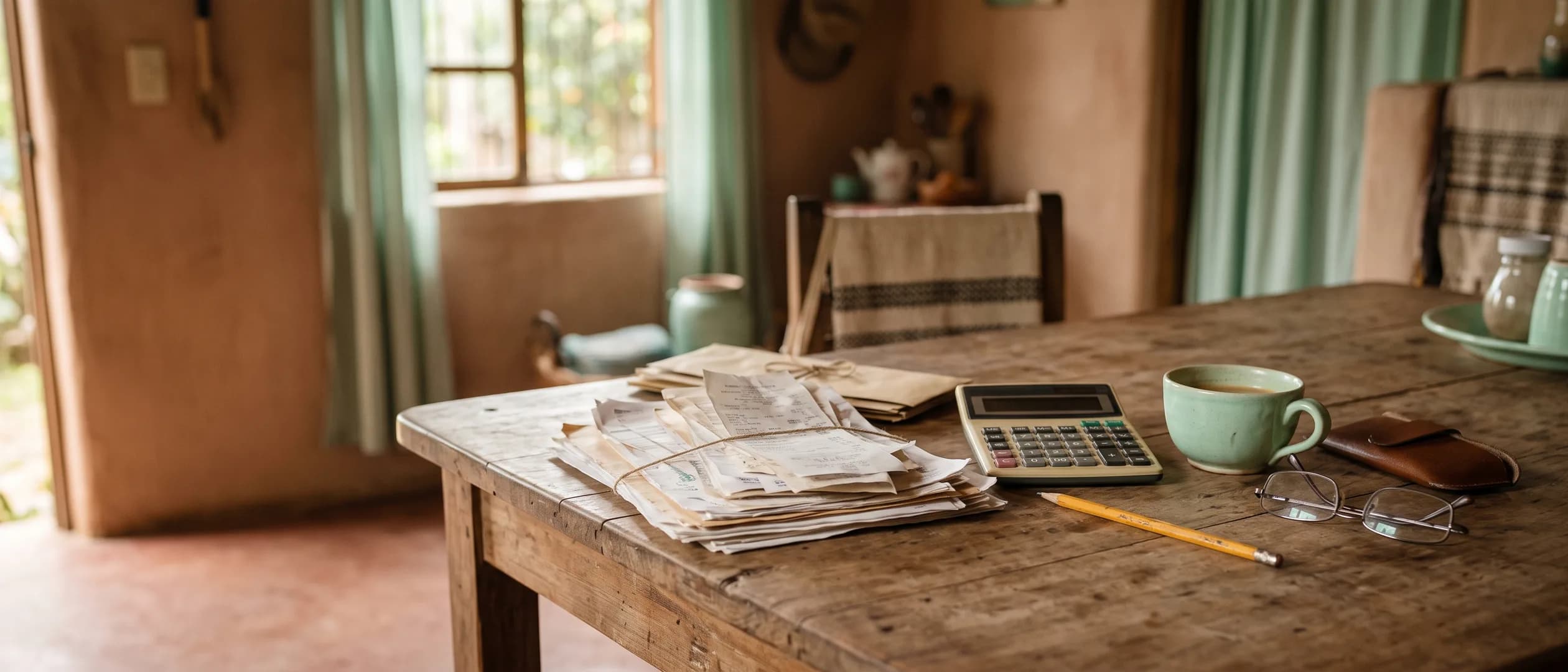
On both paths, the tax is computed on what you actually collected. And the Tenancy Law already obliges you, for a different reason, to hand over a signed receipt for every month of rent (article 26, under a fine of one month's rent). Both duties are met with the same habit: a receipt for every payment, with the date, the amount and the month it covers.
A landlord with tidy receipts fills in the declaration in twenty minutes. One without them rebuilds the year from a chat thread and a bank statement, and usually gets it wrong against themselves.
The questions for your accountant
Bring these, and you leave with the full answer:
- With my properties and their rents, which ones pass L 15,000 a month and which don't? How is it added up when one property has several units?
- For the ones that do, when is the cedular declaration filed and how is it paid?
- For the ones that don't, which income tax band does the rent land me in once added to my other income?
- Do I have to issue SAR-authorised receipts (with a CAI) for these rentals, or is the signed receipt the Tenancy Law asks for enough?
- If I also rent out commercial premises, does the treatment change?
How to have the numbers ready in April
Everything above becomes easy or hard because of one thing: whether you know how much you collected each month for each property. In Bevorah every payment is recorded with its receipt, by unit and by month, so at year end you export the total per property and send it to the accountant, instead of rebuilding it from WhatsApp.
What an owner takes from this
Over L 15,000 a month per property: the single 10% annual tax, declared in the SAR's cedular module. Under it: the rent goes on your annual personal income tax return. In both cases, a receipt for every payment and an accountant who confirms your case once a year.
Sources
- SAR, What is the Specific Single Income Tax on the rental of homes or apartment buildings?: 10% rate, L 15,000 monthly threshold, article 5 of Decree 17-2010, exclusions.
- SAR, help for the Annual Sworn Declaration of the Cedular Income Tax on Residential Rent.
- SAR, Income Tax, including the guide for the personal return (code 102).
- 2026 progressive income tax table (SAR communiqué 02-2026), per EY and Deloitte.
- Ley de Inquilinato, Decree 50 (1966): article 26, a receipt for every month.