
- By default, the landlord does the necessary repairs and the tenant the minor 'locative' ones: small wear and whatever was damaged through their use.
- If the damage comes from force majeure or the poor quality of the home, the landlord pays even for a minor repair.
- The lease can change the rule; what it can't do is leave it unwritten, because that is where arguments start.
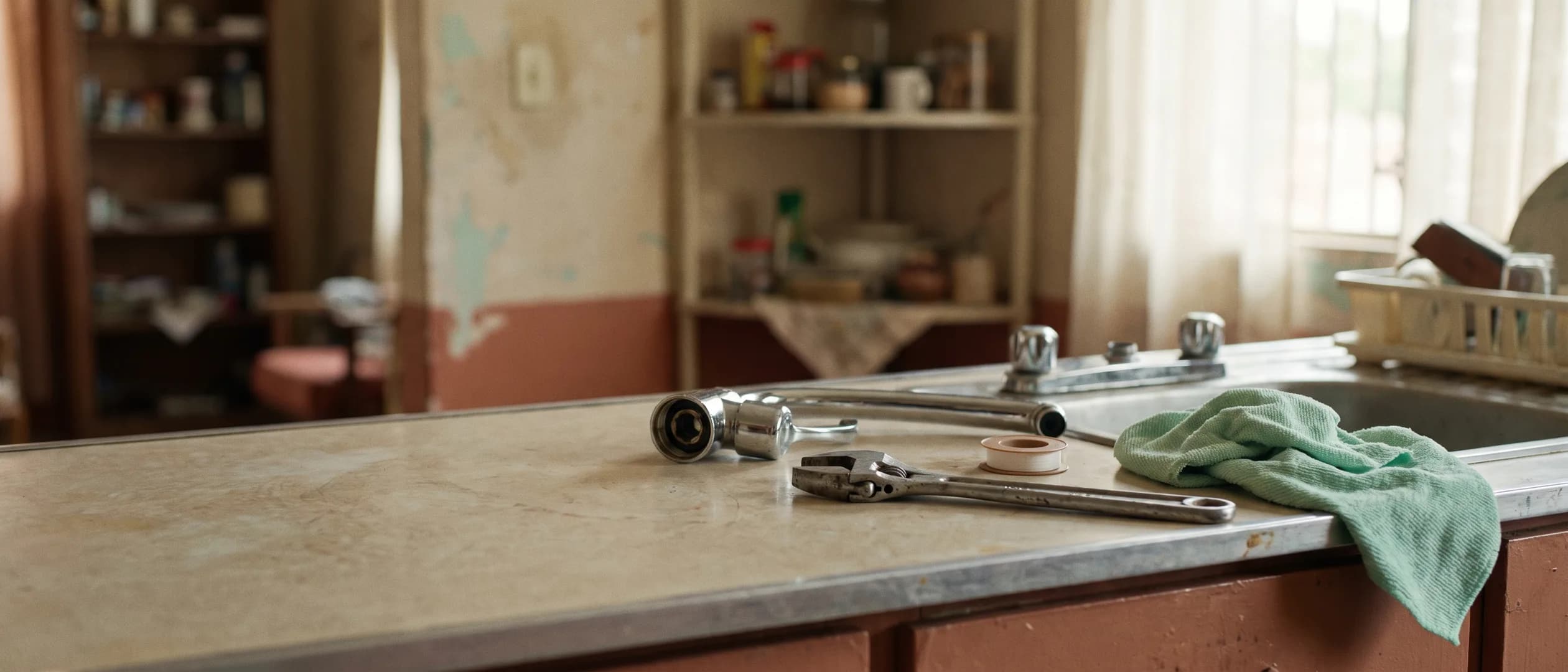
The kitchen tap is dripping. The tenant sends the photo on a Tuesday night with a question that seems small: "do I fix this or do you?". What you answer sets the tone for the rest of the lease.
The good news is that there is a rule, it has been in the Civil Code for over a century, and it is more sensible than it sounds. The bad news is that almost nobody writes it into the lease, which is why every repair turns into a negotiation.
This is not legal advice. It is the law's default rule and how to apply it; your lease may say otherwise.
The default rule: necessary and locative
The Civil Code divides repairs into two kinds. Article 1693 says it in full: the landlord's obligation to keep the property in good condition "consists in making, during the tenancy, all necessary repairs, except the locative ones, which generally fall to the tenant".
- Necessary repairs are the ones that keep the home serving the purpose it was rented for: the roof, the structure, the wiring, the plumbing, the water heater that died of old age. The landlord pays, because article 1690 obliges them "to keep it in a condition to serve the purpose for which it was rented".
- Locative repairs are, under article 1706, "those which by the custom of the country fall to tenants, and in general those kinds of deterioration ordinarily produced through the fault of the tenant or their dependants". The pane that broke, the lock that was forced, the tap washer, the door the child scratched. The tenant pays.
And an exception in the tenant's favour, in the same article 1693: the landlord pays "even for locative repairs, if the deterioration that made them necessary came from force majeure or an act of God, or from the poor quality of the rented property". If the tap drips because the plumbing was bad from the start, it is yours even though it is a small repair.
How to apply it: two questions
For any repair, ask two questions in order:
- Why did it break? If it was misuse, neglect or a knock by the tenant (or their family or visitors; article 1707 makes them liable for all of them), the tenant pays. If it was age, a defect in the home, a storm or a power surge, the landlord pays.
- Is it minor maintenance or a real repair? Replacing a washer, a bulb, unblocking a drain clogged through misuse: locative, tenant. Replacing the heater, repairing the pump, fixing a leak inside a wall: necessary, landlord.
Those two questions settle 90% of cases. For the other 10% there is the lease.
What the tenant must always do: give notice
There is a tenant obligation many landlords don't know about, and it works in their favour. Article 1701 says the landlord reimburses indispensable repairs the tenant made at their own expense only "provided the tenant did not make them necessary through their own fault and gave the landlord notice so that they could do them at their own cost".
In other words: the tenant has to give notice first. If they fix it on their own without telling you, they lose the right to be reimbursed, unless the urgency made notice impossible. Put in the lease how notice is given (a message, the portal) and how quickly you respond. That protects both sides: you from surprise invoices, the tenant from waiting with a leak.
What the landlord can't do: leave the home unusable
On the other side, the law has teeth too. Article 1698 gives the tenant the right to end the lease "if the poor condition or quality of the property prevents them from making the use of it for which it was rented", even if the problem appeared after signing and through no fault of theirs. And article 1694 says that, when there are urgent repairs the tenant must put up with, they "have the right to a reduction of the rent, meanwhile, in proportion to the part" they cannot use.
A home without water because of a pump the landlord won't fix is not a whiny tenant; it is a rent reduction or a terminated lease, with the law on their side.
How to write it once in the lease
Article 1693 ends with the key sentence: "The parties' stipulations may modify these obligations". You can agree something different. What you should not do is leave it in the air. A clause that works has three parts:
- The general rule, in the law's own words: the landlord does the necessary repairs, the tenant the locative ones, and force majeure or poor quality is always the landlord's.
- A short list of examples on each side, for the typical arguments: bulbs, washers and drains clogged through use, tenant; heater, pump, roof, wiring and leaks inside walls, landlord.
- The procedure: how the tenant gives notice, within how many days you answer, who picks the tradesperson, and up to what amount the tenant may fix things themselves and deduct from the rent with an invoice.
With that, Tuesday night's question has an answer before it is asked.
How to keep track of it outside the chat
The real problem with repairs is not the law, it is follow-up: the photo is somewhere in WhatsApp, the plumber said Thursday, nobody knows whether he came. In Bevorah the tenant reports the repair from their phone with a photo, you assign it to whoever fixes it (a trusted tradesperson or yourself), and both of you see its status until it is closed. The history stays with the unit: what was fixed, when and for how much, which is exactly what you need when settling the deposit or deciding whether that tap is due for a full replacement.
What an owner takes from this
Necessary, landlord; locative, tenant; force majeure or poor quality, landlord. Two questions to apply it (why it broke, and whether it is minor or structural), the tenant's duty to give notice before fixing, and a clause with the rule, examples and procedure. Written once, it serves every lease.
Sources
- Civil Code of Honduras: articles 1690, 1693, 1694, 1698, 1701, 1706 and 1707.
- Ley de Inquilinato, Decree 50 (1966): article 51, items 5, 6, 8 and 9, on deterioration through negligence, unauthorised alterations and repairs that require vacating.